
Minnesota Hospital Association Honors Health Care Organizations for Advancing Quality and Safety, Workforce Innovation, and Impactful Communications
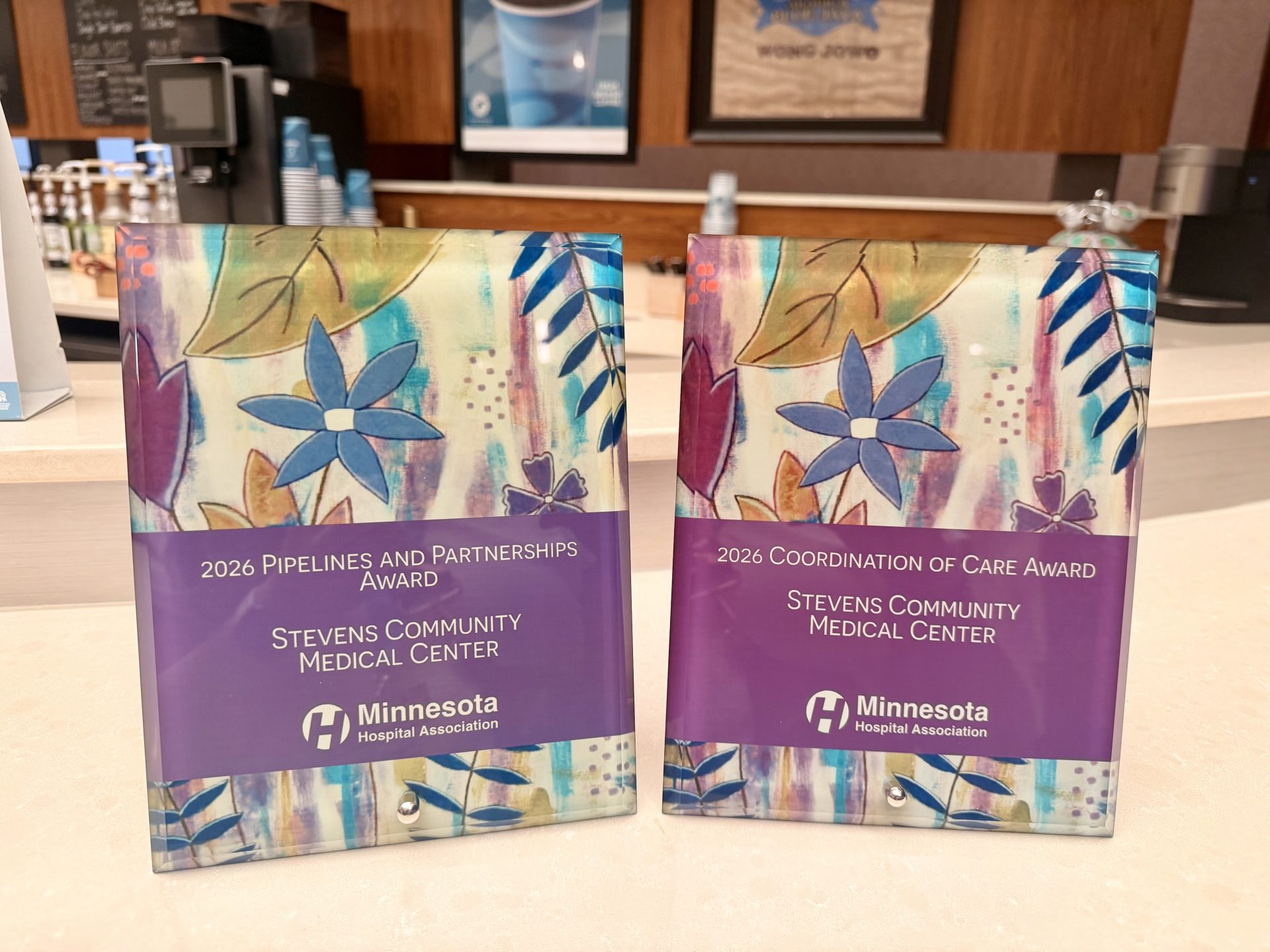
May 21, 2026, Saint Paul, Minn. — The Minnesota Hospital Association (MHA) recognized several hospital and health system teams and individuals from across the state this week for their work to strengthen patient care, communicate with patients and their communities, and support Minnesota’s health care workforce. The awards were presented during MHA’s 2026 Spring Innovation Forum. Among those awardees Stevens Community Medical Center (SCMC) was honored with two of those awards:
1️⃣Pipelines & Partnerships Workforce Award (pictured are Nancy Olson, Kayla Arnold & Maureen Ritter Gonnerman & Karla Larson)
2️⃣Coordination of Care Quality & Safety Award for their collaboration with Conexiones (pictured are Angie Cole & Nancy Olson)
“Across Minnesota, hospitals and health systems are finding innovative ways to improve care, strengthen the workforce, and better serve their communities,” said MHA President and CEO Dr. Rahul Koranne. “At a time when hospitals and health systems are navigating significant uncertainty, these awards highlight the dedication, creativity, and collaboration happening every day in health care organizations across our state.”
About the Awards
Pipelines & Partnerships Workforce Award SCMC has transformed a single “grow their own” workforce effort to develop talent across Radiology, Laboratory Sciences, and Nursing through strong partnerships with education and workforce programs. By reducing barriers for students and investing in long‑term career pathways, they not only fill critical roles but also engage the next generation of health care professionals.
SCMC also received the Coordination of Care Quality & Safety Award for their collaboration with Conexiones. SCMC has partnered with Conexiones to help Spanish‑speaking residents better navigate the health care system through facility tours, education, and open dialogue. Supported by bilingual staff and certified medical interpreters, this collaboration reduces language and cultural barriers, builds trust, and ensures equitable access to care for the community they serve.